
Polytrauma/TBI System of Care





Welcome to the Palo Alto Polytrauma Rehabilitation Center
The Palo Alto Polytrauma Rehabilitation Center (PRC) is one of 5 facilities in the country designed to provide intensive rehabilitative care to Veterans and Servicemembers who experienced severe injuries (including brain injuries) to more than one organ system. Palo Alto also houses a Polytrauma Network Site (PNS)- one of 23 facilities designed to provide outpatient rehabilitative care.
Polytrauma is defined as two or more injuries sustained in the same incident that affect multiple body parts or organ systems and result in physical, cognitive, psychological, or psychosocial impairments and functional disabilities. Traumatic brain injury (TBI) frequently occurs as part of the polytrauma spectrum in combination with other disabling conditions, such as amputations, burns, pain, fractures, auditory and visual impairments, post-traumatic stress disorder (PTSD), and other mental health conditions. When present, injury to the brain is often the impairment that dictates the course of rehabilitation due to the nature of the cognitive, emotional, and behavioral deficits related to TBI. For more information about Polytrauma, visit the national Polytrauma System of Care site.
The Polytrauma System of Care in Palo Alto includes:
- Polytrauma Rehabilitation Center (PRC) - an inpatient rehabilitation unit.
- Polytrauma Transitional Rehabilitation Program (PTRP) - a TBI residential rehabilitation unit. Learn More
- Intensive Evaluation and Treatment Program: assessment, treatment, and care coordination to support the operational preparedness of our Special Operations Forces and Conventional Active-Duty Service Members, or the transition to civilian life for Veterans with a complex history of mild to moderate traumatic brain injury (TBI) and common comorbidities
- Polytrauma Network Site (PNS) an interdisciplinary outpatient program. Learn more
Mental Health Support/Veterans Crisis Line
Many Veterans with Polytrauma injuries also need mental health support. If you or someone you know is having trouble readjusting to civilian life, is having trouble sleeping, or is experiencing mood swings, depression, or other signs of extreme stress, we can offer free or low-cost assistance and care.
Veterans Crisis Line.

For immediate help, call the National Veterans Crisis Line at 1-800-273-TALK (8255). Your call is confidential and can also be anonymous. Or, you may have a confidential online conversation with a professional on the National Veterans Crisis Line Web Chat site
Readjustment Counseling Service (Vet Centers)
National Center for Post-Traumatic Stress Disorder
Learn more about OEF/OIF services available throughout the region.
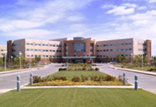
VA Palo Alto Health Care System
3801 Miranda Ave
Palo Alto, CA 94304
(650) 493-5000
Toll Free: 800-999-5021
Social Work Case Manager Supervisor, Rehabilitation
Program Manager, Post-9/11 Military2VA (M2VA) Case Management
Associate Social Work Chief, Rehabilitation
Laura Gomez
(650) 444-7114
Transition Care Management Program Coordinator
Laura Gomez
(650) 444-7114
Palo Alto PRC
Medical Director of PRC/CRC/SSP
Nathan Barnett, MD
(650) 493-5000, Ext 62345
Polytrauma Social Work Case Manager:
Sylvester Williams
(650) 353-6448
Admissions Case Manager
Sandra Stafford-Cecil
650-493-5000 ext 66764
Polytrauma Social Work Case Manager:
Stefanie Chin
(650) 353-6448
Polytrauma Director
Pawan Galhotra
(650) 493-5000, Ext 67271
Palo Alto PTRP/IETP
PTRP/IETP Director
Jerome Sabangan
(650) 493-5000, Ext. 69510
Medical Director of PTRP/IETP
Nadja Mencin MD
PH:(650) 493-5000, Ext. 66866
Admissions Case Manager
Sandra Stafford-Cecil
650-493-5000 ext 66764
Patient Care Coordinator for PTRP/IETP
Chenal- Christine Roberts, MSN, RN, x67055
Palo Alto PNS
PNS Director
Esmeralda Madrigal
(650) 493-5000, Ext. 65053
Admissions Coordinator
Olga Katsnelson
925 373-4700 Ext. 33081
Rehabilitation Deputy Chief of Staff (Polytrauma, SCI/D, BRS, PM&R, RT)
Odette Harris, MD, MPH
(650) 493-5000, Ext. 62212
VA Palo Alto Health Care System is a proud member of the Sierra Pacific Network – Veterans Integrated Service Network (VISN) 21.
Additional Information
If you are interested in more information about admission to the Palo Alto Polytrauma Rehabilitation Center or want to schedule an evaluation, please contact Sandy Stafford-Cecil, our Polytrauma Admissions Coordinator, at (650)-493-5000, Ext. 66764.
Returning Servicemembers
Veterans returning from Operation Enduring Freedom and/or Operation Iraqi Freedom (OEF/OIF) should contact their local OEF/OIF Coordinator for information about benefits and health care enrollment.
- Points of contact for Veterans and returning Servicemembers throughout the Northern California and Northwestern Nevada region.
Rehabilitation Tools
The Memory Book: One unique tool developed by the TBI team that helps patients acquire the skills of normal daily life is a memory book. In the book, patients keep a schedule and write down reminders for themselves. As one former patient, Alec Giess, describes it, "You teach yourself something, then the next day you've got to teach it again. And again. And again." He wore a rubber band around his wrist to remind him to look in his book.
Driving Simulator: If the patient is cognitively and physically able to drive, the simulator helps the patient get ready for the road before actually going through on-the-road driver training.